
QUATRON
Neutral Plasma Beam Sources
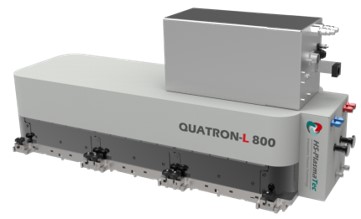
QUATRON – L
Linear Plasma Beam Source
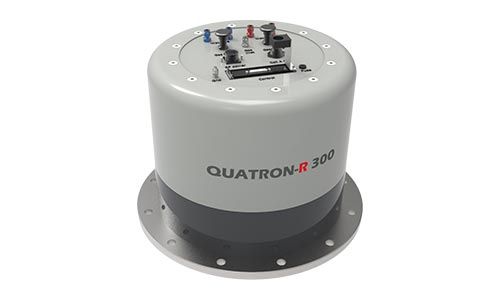
QUATRON – R
Round Plasma Source
QUATRON Technology
The methods of plasma generation and extraction used and patented by HS Group GmbH allow the use of plasma technology in a variety of applications.
Our QUATRON technology is based on four important features that make these plasma source an outstanding tool for versatile use in the industry and in science.
The four important QUATRON features are:
⇒ Capacitive coupled
⇒ Highly energetic
⇒ Resistance to process-related pollution (no glass bodies)
⇒ All process gases, including reactive gases, can be used
The QUATRON sources’ unique arrangement of capacitively coupled plasma cup with axis aligned magnetic coils allow a high degree of control for
⇒ Ion Energy – the energy of the extracted ions is concentrated in a very narrow band
⇒ Ion Current
⇒ Plasma Beam Focus
A conversion of our plasma sources to different frequencies, for example, 13.56 MHz, 27.12 MHz or 40 MHz is easily possible. Higher frequencies lead to a higher degree of ionization and thus to a higher plasma density, a higher ionic current and higher energy.
The QUATRON Plasma Source can be used for:
⇒ Plasma Surface Treatment
⇒ Ion Assist Processes such as Ion Beam Assisted Electron Beam Deposition (IBAD)
⇒ Ion Etching
⇒ Plasma CVD – the only source that provides a high kinetic energy to the reactants of the CVD process without the need to bias the substrate
More features of our QUATRON plasma sources:
⇒ Neutral and parallel beam (no static charge of the substrate)
⇒ Simple Extraction Grid – only wear part
⇒ Ion energy in the beam exactly adjustable: 20 to ~2,000 eV
⇒ Beam current: up to ~ 6 mA/cm²
⇒ Typical work range/pressure range: 1*10-4 to 5*10-3 mbar
⇒ Very mono-chrome energy distribution in the respective pressure range
⇒ Plasma operation with several gases simultaneously with initial contact (mixing) in the plasma source
With our capacitively coupled plasma sources, both CVD processes and plasma-assisted processes in conventional PVD processes are possible. Typically, the energy range is 20 eV to 2,000 eV and higher.
What is plasma?
Plasma is a partially or completely ionized gas consisting of neutral atoms or molecules and charged particles (ions and electrons).
Often, plasma is referred to as the fourth state of matter. The other three states are solid, liquid and gas.
The most important feature of plasma is its quasi-neutrality. This means that the total electric charge is almost zero despite free charges (ions and electrons). The free electric charges make plasma the conductive medium, which leads to a very good interaction with magnetic and electric fields. As a result, plasma can be formed and influenced and thus controlled, which is very important for the use of plasmas and plasma sources in different places and for different purposes.
Plasmas are used in many ways:
- Lighting technology
- Plasma screens
- Medicine
- Analysis technology
- Material processing
- and as in our case – surface engineering.
For example, for etching, plasma-induced material deposition (PECVD), non-stick coating, mirroring, roughening and curing of surfaces, improving the adhesion of layers, plasma oxidation and cleaning.